Saturday, 26 July 2008

Royal Humane Society award

The most recent issue of "Remember When" published by the Evening Chronicle in Newcastle includes in its Roll of Honour column the following:

1954: The Royal Humane Parchment was presented to 12-year old Anne Valerie Daglish, a pupil of Central Modern School, Wallsend. William Messenger, a nightwatchman, had been overcome by gas and fell into a four feet deep trench. In a gallant rescue Valerie managed to help the victim to safety.


The Royal Humane Society is a charity that grants awards for acts of bravery in the saving of human life and, also, for the restoration of life by resuscitation. Its awards range from bronze, silver and gold medals to Testimonials on Vellum and Parchment.

The Testimonial on Parchment is awarded where someone has put themselves in danger to save, or attempt to save, someone else. Many of the awards go to people who have swum to the rescue of someone else - in a quarry, a lake, a river or at sea.

Saturday, 19 July 2008

Some useful web sites

Firstly my apologies for the lack of recent postings. However, I am still here and continuing with the Daglish research! I hope to continue to make occasional postings, as time allows.

The following web sites that I have not seen before have been brought to my attention - these may be useful to anyone interested in family history research.

Described as "the UK's largest and most comprehensive website concerning the history of coalmining - including a searchable database of over 164,000 recorded accidents and deaths".

The information on the site has been compiled by Ian Winstanley and is now available through this new site, sponsored by Rales solicitors from Barnsley - who are described as specialists in workplace accidents and disease compensation.


Working in association with the Commonwealth War Graves Commission, the aim of this site is:

"to photograph every war grave, individual memorial, MoD grave, and family memorial of serving military personnel from WWI to the present day and make these available within a searchable database."

The site was launched in February 2008 and is work in progress with many photos waiting to be uploaded. The site relies on volunteers to visit, record and catalogue the many hundreds of thousands of graves scattered aound the World.

This new site was launched on 11 July. It is described as:

"the first central database of statutory burial and cremation registers for the UK and Republic of Ireland -- a unique resource for family history researchers and professional genealogists ... We are making it possible for burial and cremation authorities around the country to convert their register records, maps and photographs into digital form and bring them together into a central searchable collection."

For now the site has very limited data from Kent and Sussex - and is running in test mode. During this tes period, access to data is free of charge, but after this there will be a charge to access the records (although searching will be free).

Tuesday, 17 June 2008

The Aerial Reconnaissance Archive

In the news today is The Aerial Reconnaissance Archive (or TARA), one of the World's largest collections of aeriel photography. More than 10 million military photographs are stored in the archive, most of which were taken by surveillance aircraft in World War Two. The photo below shows the German battleship Bismarck which was sunk within a week of this picture being taken.

The collection is is being re-located from Keele University to a new home at the Royal Commission on the Ancient and Historical Monuments of Scotland (RCAHMS) in Edinburgh. It is hoped much of the archive will be now made available to the public online; an earlier attempt to do this was unsuccessful.

Historian Ian Daglish has provided the BBC with some interviews about this interesting collection which will be going out today. There is also an Audio Slideshow on the BBC web site, where Ian and retired Wing Commander Michael Mockford discuss the significance of just a few of the photographs from the war.

Saturday, 17 May 2008

Richard Daglish, New Zealand

This is a photo of Richard Daglish which he signed and also wrote on the back "Taken "Somewhere in France" 10-1-17".

Richard was born in November 1892 in Tasmania, the son of James Daglish and Lydia Stevenson. James and his wife were married in Newcastle in 1884 and a few weeks later emigrated to Australia. The family later moved to Dunedin, New Zealand.

Richard's army service record shows that he joined the Dunedin Cycle and Signal Corps in 1909, going on to join No.2 Signal Company (Otago) before leaving for Europe in 1915 with the New Zealand Expeditionary Force.

He served first in Gallipoli and Somalia before arriving in France in 1916. On 2 January 1917 he was mentioned in dispatches by General Sir Douglas Haig and the photo was taken a few days after this. On 11 March 1917 he was promoted to Staff Sergeant.

In 1917 he was posted to England, marrying Mary Stewart Scott in Ryton on 5 February 1918.

The photo below of Richard and family is dated May 1918 and taken at the Kapai Studio, Dunedin. Richard also served in the Second World War.

Sunday, 11 May 2008

North East War Memorials Project


The North East War Memorials Project is a site that may be of some interest to people with ancestors from the North East who lost their lives in the two world wars.

What makes this site different from some others - such as the Commonwealth War Graves Commission - is that it is dedicated to local war memorials. This includes the public memorials ones that can be seen in towns and villages, and also ones that are less visible being inside schools, churches and working mens clubs.

Details provided include the location and description, a listing of names and a photograph. Searches can be made by name and/or location. A simple search for Daglish produces 43 results.

I have used this to find various memorials on my trips to the North East, such as the Cenotaph at Castle Bank, Morpeth.

Tuesday, 29 April 2008

The Proceedings Of The Old Bailey 1674-1913

A new site offering transcripts of trials held at the Old Bailey in London has been causing a lot of interest - so much so that the site is currently displaying a warning that, due to high demand, the site is running slowly and some services may be temporarily suspended.

The site contains the transcripts of every trial heard at the Old Bailey from 1674 to 1913, a total of more than 210,000 criminal trials. These are covered in more than 110,000 pages of text and some 120 million words - together with 195,000 digital images, contemporary maps, images of the courtroom and information on the historical and legal background to the Old Bailey court. Also included are the biographical details of around 3,000 men and women executed at Tyburn.

A search by keyword Daglish produces just 6 results.

Of these two are for a Daglish Street in East London, mentioned in a case in 1822 and again in 1866. I cannot find any information about this address or its history.

The other four references are to Daglishes appearing before the court as witnesses (including my grandfather, James Daglish) or as the victimsof crimes. No black sheep here!

The Proceedings Of The Old Bailey 1674-1913

Sunday, 27 April 2008

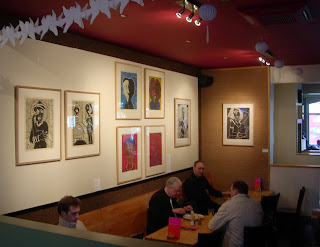
Peter Daglish exhibition opens in London

An exhibition of prints and enamels by Peter Daglish has just opened at The Sun and Doves in Camberwell, London. A private view was organised last night by the Kapil Jariwala Gallery, with Peter in attendance and playing with The Parkshot Jazz Ensemble.


The Sun and Doves is a pub which also presents art, films and music, providing an interesting and unusual venue for seeing Peter's work on display.


The exhibition continues until May 25th at The Sun and Doves, 61 Coldharbour Lane, Camberwell, London, SE5 9NS.

Sunday, 20 April 2008

Peter Daglish Racing

Peter Daglish is competing in the British Formula Ford Championship this year.

24 year old Peter from Chester-le-Street has been involved in the sport since 1998, starting in karting and for the last two years in the BARC Westfield Sports Car Championship - last year recording 3 wins, 4 second places and 4 pole positions and finishing 2nd overall. This has given him the confidence to step up to Formula Ford. This season Peter is competing in the Scolarship class, and after the first two events is lying in third place.

Formula Ford has been a launch pad for many drivers who have gone on to bigger things. The list includes drivers who moved on to Formula 1 including such names as James Hunt, Nigel Mansell, Damon Hill, Jenson Button and David Coulthard.

Races take place throughout the summer and autumn at tracks including Brands Hatch and Silverstone, with TV coverage on Sky Sports.

I know very little about the sport of motor racing - but will be keeping in touch with the results as the season progresses.

For more information, see Formula Ford 2008 and Peter's own site.
Latesst news: Evening Chronicle

Sunday, 13 April 2008

Lost Cousins, Family Search and a postcard

Firstly my apologies for the lack of new posts in the last few weeks. There has been a lack of new stories relating to the Daglish name, whilst a major project at work is likely to keep me busy until the summer.

Nevertheless, research into the Daglish name goes on.

Lost Cousins seeks to match entries based on entries in UK, US and Canada censuses. This helps to ensure correct matches by effectively removing those with similar names but from different families. Only the details from the census records are shown on the site.

LostCousins has recently reached agreement with the Guild of One Name Studies for members of the Guild to add their records to the LostCousins site - and I plan to add the Daglish details in the hope of making some new contacts. Unfortunately uploading the data is a manual process, so this may take some time to complete.

Basic LostCousins membership is free, but if you want to contact any matches you need to pay a subscription.

The International Genealogical Index (or IGI) published by the Church of Latter Day Saints on its FamilySearch site has long been a useful index of parish records for those researching family history.

The Church has now launched a new pilot site FamilySearch Labs, which includes some new indexes and also some scanned images. A simple registration is required using an e-mail address.

I was interested that it includes scanned images of Bishops' Transcripts from the Diocese of Durham from the 1700s and 1800s. Bishops' Transripts were copies of the parish registers, which were ordered to be kept from 1598 - the parish was requiredto send these transcripts within a month of Easter for the period covering the previous year. These transcripts can useful where the original register is missing or is unclear.

Details are available on the site for most County Durham parishes and many from Northumberland, with some for Yorkshire and a few for Cumberland. At present these records have not been indexed but are still useful as reserarch material available online.

Lastly, I have received a postcard photo which suggests this might be a Daglish. Little is known about this, other than the writing in pencil on the back which shows two names (Daglish on the left and Jarvis on the right) and a date (13 January 1922). The place where this was taken is unknown and the uniforms give little away. I will be trying to find out more about this - but if anyone has any details, please let me know!


Friday, 21 March 2008

Uppies and Downies

The Uppies and Downies is a series of ball games held in Workington each Easter. The games have been supported by the local Daglish family for over 300 years, and I had the pleasure of seeing the Tuesday game last year - and had hoped to be back this year, but unfortunately work commitments made this impossible.

The future of the games is in doubt following the sale of the Cloffocks, an open area on which the games are played, to Tesco - which intends to build a large supermarket and petrol station on the site (see illustration below).

In January Tesco's planning application received approval by Allerdale Council. As well as concerns for the future of the games, other questions have been raised about the way in which the local council conducted the sale.

These games are part of the history and tradition of the local community which Tesco hopes to serve - and it would be a real shame if these were lost. There have been some suggestions to re-locate the games to another site - but this would make it an organised event which is contrary to the spirit and tradition of the games.

On Tuesday evening, the ball was thrown off by Robert Daglish junior, continuing the long family tradition. His father, Robert Daglish senior, talking to the local media about the current situation said:

“I hope that the new Tesco won’t bring a stop the game as it is right in the heart of where the Uppies try to get the ball to. As long I have a breath in my body I want the game to continue. It is part of the tradition of Workington. It would be a sad day if the game had to stop.”

The Uppies won the 2008 series 2-1, their fourth successive win.

See recent coverage from the BBC and Times & Star.

The games are celebrated in a recent book "Uppies and Downies: The extraordinary football games of Britain" by Hugh Hornby, published by English Heritage.

Whilst the book takes its name from the Workington games, it also looks at other similar events around the country and provides a useful calendar of these.


The book includes a photograph from 1872 of Anthony Daglish, pictured holding the balls he had hailed for the Uppies in that and the previous year (the years are on the balls).
There is also reference to an article in the Whitehaven News in 1931 that the Daglish family once owned a 300-year old ball won by an ancestor. I wonder where that is now?

Update 2014:
I recently received an email which read:
Now that we have got rid of any talk of Tesco building on the Cloffocks we thought that would be an end to it but the council now want to build a leisure centre down there.

2014 games 
The 2014 games went ahead as usual, with the Downies winning 3-0. A report of the games appears here, with a link to a report and pictures from the Tuesday game - this notes:
The ball was thrown off by Robert Daglish, 34, who had had the honour for 24 years. He was with his wife Jennifer and their 16-month-old son Harry, who will throw off the ball when he is old enough.

The Barbarians of Workington
I also recently found another book "The Barbarians of Workington: Uppies v Downies" by Keith Wallace (Wallace & Scott 2009).


This contains many stories and photos, including the following one of Anthony Daglish:


There is also a list of Hailers of the Ball, including the following Daglishes:


Saturday, 8 March 2008

Daglish - the development of a name

There has been little new Daglish news to write about recently. If you have any stories, photos or anything that might be of interest, please let me know.

Today I attended a meeting of the London branch of the Northumberland & Durham Family History Society. The speaker was Rosalind Moffitt and the subject "Surnames in the North East".

Rosalind studies the history of surnames, in particular those from North East England where her family comes from. After studying English at Durham University, Rosalind trained as a Speech and Language Therapist and spent time working with children. She began her talk by looking at how young children adapt words - and how this might be applied to ways in which surnames developed in an age of widespread illiteracy.

Names might be simplified by dropping syllables from the word or maybe just the last consonant or by using different vowels.

Looking at the entries in the Whickham parish register for marriages - in which Daglishes have appeared since the late 1500s - we can perhaps see some examples of this.

The earliest entry is for the name Daglis, maybe a case where the last consonant has been dropped. Will Daglis married Magdalene Thompson on 30 January 1596.

Under burials, there is an entry for 3 April 1613 which reads:

"A POORE child of Daglis, his wife, and the mother and two other children of Daglis. Buried."

The spelling of Daglis continued to be used until around 1615, after which various others are used - including Dagglish, Dagleish and Dagleese - until the name is shown as Daglesh, a change of vowel. This begins with the marriage of John Daglesh to Barbery Croser on 31 May 1669 and continues until around 1691.

After this date the spelling Daglish is consistently used.

This is how the name may have developed in one key Parish - this may also have been influenced by changes in the local vicar and how the name was written down. In other places the name may have developed differently.

The subject of how the name may have changed is of interest because of some recent developments with the Daglish DNA Study.

We now have matching DNA results with a person named DOUGLAS and with a person named DALGLIESH. Both of these people live in Scotland. Both of these names have been suggested in various reference books as the source of the name Daglish (though neither have been found to be linked through standard research of historical records).

It is perhaps possible to see how Douglas may link to the early records as Daglis, and also to imagine that the Scottish name Dalglish or Dalgliesh may have been simplified if it moved across the border into North East England. This is a subject for further research.

Rosalind Moffitt runs a service Nameswell Surname Research and also writes for Family Tree Magazine.

Friday, 22 February 2008

William Daglish, Santa Cruz, California

I recently found some advertising materials for Daglish’s Health Food Service of Santa Cruz, California, and a little research led to a colourful story.


An article from the Santa Cruz Sentinel by Carolyn Swift provided some details.

The story begins in 1928, when Sarah Jane Kitchen married William Edward Daglish. The couple moved to Santa Cruz at the height of the Depression, opening the “Daglish Free Welfare Depot”. William quickly earned a reputation: the report describes him as "something of a fanatic, driving a "sign-flaunting gas chariot"... on a boisterous one-man moral crusade".

Life for his wife was difficult. She was described as "semi-invalid" and, forced by her husband to eat his chosen diet, some thought she was slowly starving – and said she occasionally went to neighbours for more food.

On July 17 1940, Sarah Jane died. She was buried the next day, Thursday, when William delivered the funeral sermon. On the following day he eloped to Reno, Nevada, with 22-year Joan Allardyce where the couple were married. This series of events led to nationwide news coverage, and one newspaper reported:

"If Daglish and Miss Allardyce had reached the Remo marriage license clerk four minutes later than they did, their marriage would have to be postponed until Sunday because Daglish’s church, Seventh Day Adventist, does not sanction marriages on Saturday."
Meanwhile, back in Santa Cruz, the authorities had ordered Sarah Jane’s body to be exhumed from the Felton Cemetery, and tested for poison.

William protested his innocence and gave his version of the story. He accused the authorities of a plot against him because of his campaigning against vice and gambling. He claimed that Sarah Jane had approved of Miss Allardyce as his future wife, and had urged him to marry her immediately after the funeral.

No poison was detected in the tests, and the authorities accepted the coroner’s decision that Sarah Jane had died of “hemorrhagic pancreatitis”.

The handbill dates from just after this in 1941. The photo shows William, Joan and their daughter Noaomi Celeste. William continued his business until his death in 1952.

William was born in 1896 in Indiana, the son of John Daglish and Mary Aldrich. His grandfather, also John Daglish, had emigrated from England.

I would be very interested to know more about the family and their story, or to hear from any relatives. Also any photos of the Daglish store in Santa Cruz, which was covered with various slogans and adverts - I have seen one small photo from the 1950s, but this is too small and the quality too poor to show here.

Friday, 15 February 2008

Daglish boxers of Workington

I recently stumbled upon an excellent web site abour Pre-War Boxing, run by boxing historian Miles Templeton. The site included details of two Daglishes who were boxing in Workington in the mid 1930s -Harry and Jim Daglish. From the site I obtained scans of two handbills from 1934.

The first is for Harry Daglish (born Henry Daglish, born 1917, died 1977). The fight to which the handbill refers took place on Monday November 12, 1934 at Drill Hall Carlisle. Harry beat his opponent Frank Moran on points.


At this time Harry would have been 17 years old. Miles tells me that he would be fighting for prizes of around 10 or 15 shillings, money that would support the family budget.

Harry was a member of Jim Pattinson’s Boxing Club and fought all over the North of England, from Workington to Manchester and across to the North East.

He carried on boxing until he was called up into the Navy during WW2. In the Navy he kept quiet about his boxing skills – but his daughter Linda tells a story:

“There was one fellow used to win bouts most of the time and he got rather too big for his boots - so Dad decided to bring him down a peg or two. Harry told his mate to put all the money he could scrape together on himself - and then he hammered the other fellow, much to everyone’s surprise! They all lost their money, except Dad’s mate - and of course the other fellow wasn't quite so big for his boots after that.”

Harry is part of the Daglish family which has been involved for many years with Workington’s famous Uppies & Downies held each year over the Easter period.

The other handbill is for Jim Daglish – and this is proving something of a puzzle, as no-one knows who this is! The fight appears to be a challenge match, as the handbill reads:

Daglish has asked for this contest, confident he will check Nugent’s series of victories. Will he?

Unfortunately we don’t know the result of the match!

My thanks to Miles Templeton for the handbills and to Linda Carter for the photo and family details.

Friday, 8 February 2008

Remember When - a Daglish research story

This week I was sent a copy of "Remember When", a monthly magazine on local history covering Newcastle and the North East. Included in this issue is a story about a Daglish family - and how an interest in finding about their family history has brought together cousins living many miles apart.

The story starts in July 2007 when Stuart Daglish, who lives in Doncaster, came across some old letters which started his interest.

Stuart knew that his father, John Francis Daglish, was from Byker in Newcastle. His father never spoke much about his childhood, except to say that he was brought 130 miles south to Doncaster from Newcastle when he was aged about 13 by someone called Elizabeth Machin and her husband. Stuart's father died in 1987, and all that Stuart had to start with was his father's old, tattered and taped birth certificate, an old photograph of his grandfather in uniform and two old letters from the only known sibling.

Stuart's grandfather, John Maddison Daglish, was born in Gateshead in 1884 and died of wounds in 1915 whilst serving in Gallipoli with the Northumberland Fusiliers. Stuart's grandmother, Theresa Daglish (nee Francis), later re-married but died in childbirth in 1922.

Stuart placed an advert in the Newcastle Chronicle looking for family members brought immediate results. He remembers:

"Three days later one of my cousins replied. She had not seen the advertisement. It was a friend of one of her daughters who read it and rushed round to their house. We had a three hour telephone conversation that Friday night and she put me in touch with other cousins. I went up to Newcastle in September to meet them and they are all wonderful people, and we are now in touch regularly. It is wonderful to discover you have new enlarged family you were not aware of."

Pictured (left to right) Kathleen Nelson, Betty Garner, Stuart Daglish and Pat Whitton.

Betty Garner is the daughter of Henry Butcher and Isabella Daglish. Kathleen Nelson and Patricia Whitton are daughters of Thomas McKane and Catherine Daglish.

Pat has been working with Stuart on the research, spending many hours in the Tyne & Wear Archives at the Discovery Museum in Newcastle, looking not just at family records but also at where their ancestors lived and the social conditions in those times.

Stuart got in touch with me at the end of last year when he was trying to find out about his great great grandfather James Daglish who married Isabella Wheatley in 1844. James was proving hard to track down, but I was able to put Stuart in touch with Elaine, also descended from James and Isabella, who had found a possible answer to this mystery and extended the research on the family back to the parish of Whickham in the late 17th century.

Stuart and Pat hope that the article in "Remember When" might result in more contacts with relatives and people who knew the family. If you would like to get in touch with Stuart and Pat, please contact me at the e-mail address in the Profile section and I will be happy to pass on your details, or leave a Comment below.


My thanks to Pat for sending me the magazine and photos, and to Stuart for the details he has provided to the Daglish One-Name Study.

Remember When is published monthly by The Evening Chronicle and aims to record the recent history of the North East through the memories of local people.

Tuesday, 5 February 2008

Liverpool tram, 1949

I recently found a photo taken in 1949 showing a Liverpool Corporation Tramways tram on route 40 from Pagemoss to Pier Head, here seen going around a curve with a shop of R.P. Daglish in the background. I wrote about this business in November - see here.
Photo copyright N.N. Forbes

Thursday, 31 January 2008

Marian Daglish 1933-2008

My wife and I today attended the funeral of Marian Daglish (nee Brown), wife of Peter Daglish and mother to Ailie and Lucas, who sadly died last week.

Our deepest sympathy to Peter and family; we know that they will greatly miss Marian.


Sunday, 27 January 2008

Ancestors on Board: Passenger Lists

An online resource that may be of interest has been made available by the company FindMyPast under the name Ancestors on Board. These records from the National Archives cover the period 1890 to 1960 - the details online currently cover the priod to 1939, with more to be added.

Many of the records are for people emigrating from the UK. In the years between 1890 and the start of WW1, an estimated 125,000 British people emigrated to USA, 50,000 to Canada and 25,000 to Australia every year. After the war, emigration continued but became increasingly controlled and often had a changed emphasis: for example, Australia became a more and more popular destination.

Also included are records of business travel, tourists and diplomats, as well as economic migrants from Europe who came to England to catch a boat to their final destination.

There is no standard form used. Passenger lists vary in size and in length, changed over time, and different shipping lines had their own pre-printed forms. Some are typed, others are handwritten; some record only a minimum of detail about the passengers, others include a wealth of information down to exact address and ultimate destination overseas.


Searching the records, I found my uncle, Ernest Edgar Daglish, travelling on the Lusitania from Liverpool to New York in December 1914. From other records, we know that in September 1915 he enlisted into the US Army. After the war, back in England, he is found again crossing the Atlantic as well as travelling to places such as Buenos Aires.

The big disadvantage is the cost of accessing the records. Searching the records is free, but to view and download you need to either buy units or to take out a subscription.

This week it was announced that Scotland Online, which runs the web site ScotlandsPeople, had acquired FindMyPast. Quite what this means is unclear - but hopefully the combined company will continue to make new records available online. Scotland Online recently won the tender for the 1911 England and Wales census records. It is understood that the 1911 census will be available from 2009, starting with the major conurbations, although personally sensitive data will be withheld until January 2012.

Image and logo copyright FindMyPast.com

Update - February 1: FindMyPast has just extended the records up to 1949, taking in the period of WW2. Records now include 20 million names within 137,000 passenger lists spanning 1890 to 1949.

Sunday, 13 January 2008

Mess Night, Germany - January 1919

This menu from January 17 1919 and was for a Mess Night held by the Alberta Regiment of the 31st Canadian Infantry Batallion.

The Canadian batallion saw action in France and Belgium from September 1915 until the end of hostilities in 1918. They formed part of the Army of Occupation in Germany in December 1918, and finally returned home in May 1919.

The menu is worth taking a moment to look at more closely - it has been put together with many references to the conflict just finished.

On the back of the menu are the signatures of some who attended the dinner - and at the top is that of R.F. Daglish.

This was Robert Findley Daglish (1896-1988), who I have written about before (see April 2007). He served in the Royal Air Force at the end of the First World War, and the photo below is thought to be his squadron; it probably includes Robert and some of the others who signed the menu card.

Monday, 31 December 2007

Daglish Corner, UpHolland

On 23 December a small ceremony took place to dedicate a memorial, quiet garden at the church of St. Thomas the Martyr, UpHolland, near Wigan in Lancashire.

The space is also known as “the Daglish corner”, and there has been a long association between the local Daglish family and the church. The dedication ceremony was attended by Richard Daglish, who writes:

“I was warmly greeted by a lay reader who is well versed in the story of Robert Daglish's early locomotive, the Yorkshire Horse, and is involved in the East Lancashire Railway (a volunteer preservation group that runs services with old stock in the Bury/Manchester area).
The church was completing its 700th anniversary celebrations since its foundation as a Benedictine monastery, and was decorated not just for Christmas but for the anniversary as well. One event had been a Christmas Tree Festival a week earlier, with 45 decorated and lit trees, entered by a range of organisations, church-based and otherwise, down the side aisles.

After the main service at which the Bishop of Warrington, David Jennings, was the guest preacher, the congregation was asked to stay in the church while the bishop, rector, lay readers, churchwardens and assorted helpers, and I left to walk to the outside area which had been cleared, paved and generally made a more welcoming space, with a good wooden bench.

A few prayers were said in rather an icy wind and we adjourned back to the church for coffee and mince pies.”
Richard learned that the building did not become the parish church until around 1880, about the same time that Robert Daglish, junior (1808-1883) contributed to the costs of building the chancel and, a little later, for a new East window. He also arranged for the remains of his parents Robert Daglish, senior (1777-1865) and his wife Margaret to be reinterred at UpHolland.

My thanks to Richard for the story and photos. Richard is the great, great, great grandson of Robert Daglish, senior.

Saturday, 29 December 2007

Blum, Ray & Daglish - Houston, Texas

Here is an envelope from 1923 from the company Blum, Ray & Daglish, a hardware company from Houston in Texas.

Research has shown that this was George Daglish, born in Brantford, Canada, in 1871, one of twins - the other was his sister Georgina - the children of Joseph Daglish (born England, about 1825, died Brantford, Canada, September 1884) and his wife Sarah Ann Marshall.

The 1920 US Census shows that George Daglish entered the US in 1877 and was naturalised in 1879. He married Allie Fitzgerald (nee Bryan) in November 1896, and they lived in Houston, Texas.

The 1930 US Census shows that George Daglish was President of the company. George died in September 1938 and his wife Allie died in February 1958. I do not believe the couple had any children.

My thanks to Constance Peck for help with details of this family. If anyone has any further information, please let me know.

Monday, 24 December 2007

Wills in England and Wales after 1858

I have added details extracted from the National Probate Calendar index for the name of Daglish for the period 1858 to 1998 into the Daglish Archive.

Since 1858, all wills in England and Wales have been administered through the civil courts; prior to this, the proving of wills came under the jurisdiction of the Church. This article is concerned with wills proved after 1858.

The Court will issue a Grant of representation which enables the person(s) named to deal with the assets and belongings (the Estate) of the deceased. There are three types:

Probate: granted to the executors named in the Will;
Letter of Administration [with Will]: granted to someone other than an executor when the deceased left a valid Will;
Letters of Administration: granted when the deceased did not leave a Will. In such cases, as there is no Will the only details provided are details of who was granted administration.

The Grant is usually a single page giving the details of the deceased and the executors or administrator – this is an example for John Daglish of Bell’s Close, Newburn who died in 1862:

The will itself can often give interesting insights into the family – the following is a short extract from the will of John George Daglish of Gateshead, who died in 1913; in it he sets out his personal possessions to be shared between his sister Mary Ann and his brother Robert:

It is possible to buy a copy of any will for a fee of £5.00. To do this you need the name of the deceased person, the name of the court and the date on which probate was granted.

To find these details a search of the National Probate Calendar is usually necessary. This is an index of Wills and Admons proved in each year. Prior to 1973, these are in book form; after this they are on microfiche and more recently held on computer. A project is underway to digitise these records to improve access to the indexes, and eventually to make it possible to order online.

For now, the only complete set of indexes from 1858 to date is held in the public searchroom at First Avenue House in Holborn, London. I spent some time there last year extracting the details for Daglish, and these are now included in the Daglish Archive for the period 1858 to 1998.
Local District Probate Registries usually have indexes covering the last 50 years.

The amount of detail shown in the index has changed over the years, but every entry shows the full name and address of the deceased, the date of death, the type of grant, the date of grant and the Registry at which it was issued, the gross value of the Estate.

Wills can be purchased either by:
- A personal visit to Court of Probate at High Holborn (which offers a one-hour service, or a 7-day postal service);
- From your local District Probate Registry;
- By post from the Probate Registry at York (which includes a four-year search).
More details can be found on on the H.M. Courts web site.

News update

Two recent news stories caught my eye.

The first concerns Toby Daglish from New Zealand, a professor at the Victoria University in Wellington.

Toby was previously at the University of Iowa in the United States, and whilst there he was one of three finance academics who foresaw the looming U.S. subprime mortgage crisis at least three years before the problems started to become public early in 2007.

Late in 2004 he bought a house in Iowa City and arranged a mortgage through a small regional bank. “I was thinking I was going to have to pay mortgage insurance there - but the lady from the bank said, “Oh, we’re having a promotion this month, and you don’t have to buy mortgage insurance”. I remember thinking that’s not a very sound way to run your business.”

This experience led to the study which highlighted concerns with sectors of the US mortgage business.

Full story here.

The second story comes from Visilia, a city in central California, where Dr. Thomas Daglish has been named as Tulare County Physician of the Year. Dr. Daglish has lobbied tirelessly to improve health provision.

The report notes that Dr. Daglish came to Visalia from Canada in 1979. He started an obstetrics practice that eventually evolved into the Visalia Family Practice Medical Group. He now practices general medicine.

"There's always new challenges," he said. "And there's always somebody coming up with some strange legislation that is going to impact the delivery of health care."

While he said his work in organized medicine has made a positive impact over the years, Daglish admitted that "in politics, you never get 100 percent what you want." He said he will not stop lobbying to improve the public's health.

"As long as I'm capable of doing it, I think it's worth it to keep fighting," Daglish said.

Full report here.